Trauma-Informed Primary Care - Understanding the Impact of Trauma and Attachment on Health Outcomes
ACES research and Health Outcomes
We have an abundance of highly sound research that demonstrates the long-lasting effects of adverse childhood experiences measured by the Adverse Childhood Experiences scale. The Adverse Childhood Experiences Study examined the impacts of early childhood trauma on adult health and functioning on 17,000 people (Felitti & Anda, 2009). The results were shocking clearly indicating that adverse childhood experiences (ACES) are common.
This study correlated ACE scores against health outcomes and the results of this study, as well as many longitudinal studies, have demonstrated a direct relationship between our early adverse experiences and later life health outcomes in many domains as indicated by a multitude of sources (Burke Harris, 2014; Felitti & Anda, 2009; Centre for Disease and Control, 2014):
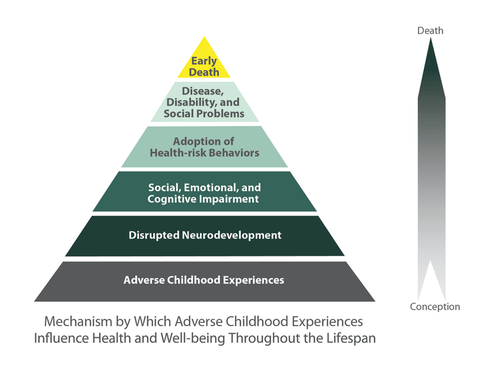
Burke-Harris (2014) indicates that ACES have a dose-response relationship between ACES and health outcomes. The higher your ACES score the worse your health outcome largely due to the neurological and physiological implications that these early adverse experiences have on the developing brain. Repeated HPA activation (such as in the case of childhood physical or sexual abuse, domestic violence exposure etc) causes our stress activation response system to shift from being adaptive / life saving to maladaptive/health damaging. Children are exceptionally sensitive to repeated stress exposure and activation because their brains and bodies are just developing. High doses of adversity impact the developing immune system, the developing brain, the developing hormonal system, and the way our DNA is read and transcribed.
Burke-Harris (2014) quotes Dr. Robert Block, former president of the American Academy of Paediatrics “Adverse childhood experiences are the single greatest unaddressed public health threat facing our nation today.”
Putnam, Harris, Lieberman, et. al., (2015) indicate that relationships of this magnitude are rare in epidemiology demonstrating that we need to recognize this as the public health crisis that it is and as one that is treatable. We therefore need to implement services for education, early intervention, and prevention and certainly trauma-informed.
What is exciting is that this has created a shift in the US - and in Canada as well. The American Academy of Paediatrics is promoting trauma-informed care and treatment as are many community and health based organizations.
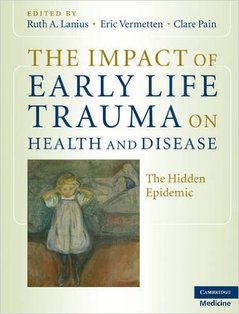
Additionally, Dr. Feletti Co-Principal Investigator, Adverse Childhood Experiences (ACE) Study found that if you ask people about their past, if their past is effecting them, and how so - essentially allowing them to form meaning, actually decreased medical and ER visits. An excerpt from the book The Hidden Epidemic: The Impact of Early Life Trauma on Health and Disease edited by Dr. Ruth Lanius is included below:
Implications for Healthcare
We have made a limited but instructive attempt to integrate the ACE Study findings into clinical practice. At Kaiser Permanente‘s high-volume Department of Preventive Medicine in San Diego, we have used what we learned to expand radically the nature of our Review of Systems (ROS) and Past History questionnaire. We have now asked routinely of over 440,000 adult individuals undergoing comprehensive medical evaluation a number of questions of newly discovered relevance...Surprisingly, a 35% reduction in doctor office visits (DOVs) was found in the year subsequent to evaluation, compared to the year before. Additionally, analysis showed an 11% reduction in Emergency Department (ED) visits and a 3% reduction in hospitalizations. This change was dramatically and unexpectedly different from a much smaller, 700-patient evaluation carried out 20 years earlier when we worked in the more usual biomedical mode. That earlier approach provided a net 11% reduction in DOVs compared to the antecedent year, in spite of a 14% referral rate. No evaluation was made then of ED visits or hospitalization. Finally, we found that the unexpectedly notable reductions in DOVs and ED visits totally disappeared in the second year after comprehensive evaluation, when there was a reversion to prior baseline. This resource discusses questions primary care physicians can as and responses found to be most helpful.
Excerpt from article: 7 ways childhood adversity changes a child's brain (Nakazawa, 2017)
The number of adverse childhood experiences an individual had predicted the amount of medical care she’d require as an adult with surprising accuracy:
We have an abundance of highly sound research that demonstrates the long-lasting effects of adverse childhood experiences measured by the Adverse Childhood Experiences scale. The Adverse Childhood Experiences Study examined the impacts of early childhood trauma on adult health and functioning on 17,000 people (Felitti & Anda, 2009). The results were shocking clearly indicating that adverse childhood experiences (ACES) are common.
This study correlated ACE scores against health outcomes and the results of this study, as well as many longitudinal studies, have demonstrated a direct relationship between our early adverse experiences and later life health outcomes in many domains as indicated by a multitude of sources (Burke Harris, 2014; Felitti & Anda, 2009; Centre for Disease and Control, 2014):
- ACE studies calculate that for each adverse childhood experience risk for early initiation of substances increased 3-4 times;
- ACEs account for 1/2 to 2/3 of serious substance use;
- ACES increased the likelihood of sex before 15 for girls and the risk for impregnating a teenager for males;
- There is an increased prevalence of Mood Disorders, Anxiety Disorders, Substance Use Disorders, Post Traumatic Stress Disorder (PTSD), Suicidality, and Impulse Control Disorders;
- ACES increase the likelihood for being both the victim of or perpetrator of intimate partner violence;
- ACES are also attributed to an increased risk for Ischemic Heart Disease, Stroke, Chronic Obstructive Pulmonary Disease (COPD), Diabetes, and Sexually Transmitted Diseases;
- ACES are also attributed to impaired worker performance inclusive of absenteeism, job performance, and financial problems.
Burke-Harris (2014) indicates that ACES have a dose-response relationship between ACES and health outcomes. The higher your ACES score the worse your health outcome largely due to the neurological and physiological implications that these early adverse experiences have on the developing brain. Repeated HPA activation (such as in the case of childhood physical or sexual abuse, domestic violence exposure etc) causes our stress activation response system to shift from being adaptive / life saving to maladaptive/health damaging. Children are exceptionally sensitive to repeated stress exposure and activation because their brains and bodies are just developing. High doses of adversity impact the developing immune system, the developing brain, the developing hormonal system, and the way our DNA is read and transcribed.
Burke-Harris (2014) quotes Dr. Robert Block, former president of the American Academy of Paediatrics “Adverse childhood experiences are the single greatest unaddressed public health threat facing our nation today.”
Putnam, Harris, Lieberman, et. al., (2015) indicate that relationships of this magnitude are rare in epidemiology demonstrating that we need to recognize this as the public health crisis that it is and as one that is treatable. We therefore need to implement services for education, early intervention, and prevention and certainly trauma-informed.
What is exciting is that this has created a shift in the US - and in Canada as well. The American Academy of Paediatrics is promoting trauma-informed care and treatment as are many community and health based organizations.
Additionally, Dr. Feletti Co-Principal Investigator, Adverse Childhood Experiences (ACE) Study found that if you ask people about their past, if their past is effecting them, and how so - essentially allowing them to form meaning, actually decreased medical and ER visits. An excerpt from the book The Hidden Epidemic: The Impact of Early Life Trauma on Health and Disease edited by Dr. Ruth Lanius is included below:
Implications for Healthcare
We have made a limited but instructive attempt to integrate the ACE Study findings into clinical practice. At Kaiser Permanente‘s high-volume Department of Preventive Medicine in San Diego, we have used what we learned to expand radically the nature of our Review of Systems (ROS) and Past History questionnaire. We have now asked routinely of over 440,000 adult individuals undergoing comprehensive medical evaluation a number of questions of newly discovered relevance...Surprisingly, a 35% reduction in doctor office visits (DOVs) was found in the year subsequent to evaluation, compared to the year before. Additionally, analysis showed an 11% reduction in Emergency Department (ED) visits and a 3% reduction in hospitalizations. This change was dramatically and unexpectedly different from a much smaller, 700-patient evaluation carried out 20 years earlier when we worked in the more usual biomedical mode. That earlier approach provided a net 11% reduction in DOVs compared to the antecedent year, in spite of a 14% referral rate. No evaluation was made then of ED visits or hospitalization. Finally, we found that the unexpectedly notable reductions in DOVs and ED visits totally disappeared in the second year after comprehensive evaluation, when there was a reversion to prior baseline. This resource discusses questions primary care physicians can as and responses found to be most helpful.
Excerpt from article: 7 ways childhood adversity changes a child's brain (Nakazawa, 2017)
The number of adverse childhood experiences an individual had predicted the amount of medical care she’d require as an adult with surprising accuracy:
- Individuals who had faced 4 or more categories of ACEs were twice as likely to be diagnosed with cancer as individuals who hadn’t experienced childhood adversity.
- For each ACE score a woman had, her risk of being hospitalized with an autoimmune disease rose by 20 percent.
- Someone with an ACE score of 4 was 460 percent more likely to suffer from depression than someone with an ACE score of 0.
- An ACE score greater than or equal to 6 shortened an individual’s lifespan by almost 20 years.
Adverse Childhood Experiences Presentation Graphics (Centre for Disease and Control Prevention, 2016)

Resources
Adverse Childhood Experiences Study: https://www.cdc.gov/violenceprevention/acestudy/
Link to Trauma Toolkit for Primary Care American Academy for Pediatrics: https://www.aap.org/en-us/advocacy-and-policy/aap-health-initiatives/healthy-foster-care-america/Pages/Trauma-Guide.aspx *Note - although geared towards foster children this all generalizes to children, youth and really adults as well as it looks at the early impacts which are then compounded upon as brain growth and development continues.
Link between emotional stressors and cardiovascular disease: http://www.thelancet.com/journals/lancet/article/PIIS0140-6736(16)31714-7/abstract
Childhood Adversity Narratives: http://www.canarratives.org
Link to Trauma Toolkit for Primary Care American Academy for Pediatrics: https://www.aap.org/en-us/advocacy-and-policy/aap-health-initiatives/healthy-foster-care-america/Pages/Trauma-Guide.aspx *Note - although geared towards foster children this all generalizes to children, youth and really adults as well as it looks at the early impacts which are then compounded upon as brain growth and development continues.
Link between emotional stressors and cardiovascular disease: http://www.thelancet.com/journals/lancet/article/PIIS0140-6736(16)31714-7/abstract
Childhood Adversity Narratives: http://www.canarratives.org
Custom Training: Understanding the Impact of Trauma and Attachment on Health Outcomes– Lori Gill, Presenter
Lori regularly provides custom trainings regarding trauma, attachment dysregulation, the resulting neurological and physiological outcomes and strategies to promote regulation of the nervous system, brain, and mind. The Attachment and Trauma Treatment Centre for healing specializes in treating the impacts of adversity and attachment dysregulation and as such our trainers are keen to share their knowledge of effective strategies and interventions to help professionals support children, youth, and adults and to help heal life's hurts. Learn more by contacting [email protected].
Below is a sampling of feedback from trainings delivered to medical professionals on this topic (doctors, psychiatrists, medical students, Med Plus program students, nurses, clinicians, medical administrators etc):
General feedback:
Senior staff say it was one of the best trainings they ever attended so thanks for sharing your knowledge and expertise with us!
Learning about the effects of malignant attachment and what we can do about them.
Prior to this I had very little knowledge on trauma and attachment. Now I feel like I know much more and have lots of resources to review.
Great presentation!
Good, short overview of the roots of trauma.
Discussion about how to best interact with a patient who has experienced trauma.
This is one of the most meaningful presentations I have ever attended.
Linking trauma response to other types of diagnosis/misdiagnosis. Some really great insights about “abnormal” trauma experience.
Opening my eyes to my client’s traumas that I might have missed.
Most valuable aspect:
Talking about dysregulation and how to ground a patient.
Learning about how trauma impacts functioning.
Learning more about the tools and techniques used for treatment.
How all types of professionals should be aware of trauma.
Discussion of strategies for hypervigilence and activation in affect.
Impact trauma has on an infant.
Discussing how to approach a dysregulated patient.
That trauma can come in many different forms and develop for many different reasons at various points in an individual's life.
Her knowledge and experience with trauma cases and how she showed us how she would approach certain cases.
Gaining an understanding of how childhood trauma can affect individual's later in life and how that instead of judging them for how they behave we should take a step back and look at their environment and challenges.
The adulthood effects that childhood trauma can have.
Learning about how deeply childhood trauma can affect an adult later in life.
Amazing presenter; you can feel her passion for her job!!
Expanding my knowledge on the extreme effects of trauma in connection especially to the medical field.
Hearing examples of how trauma can be helped.
Below is a sampling of feedback from trainings delivered to medical professionals on this topic (doctors, psychiatrists, medical students, Med Plus program students, nurses, clinicians, medical administrators etc):
General feedback:
Senior staff say it was one of the best trainings they ever attended so thanks for sharing your knowledge and expertise with us!
Learning about the effects of malignant attachment and what we can do about them.
Prior to this I had very little knowledge on trauma and attachment. Now I feel like I know much more and have lots of resources to review.
Great presentation!
Good, short overview of the roots of trauma.
Discussion about how to best interact with a patient who has experienced trauma.
This is one of the most meaningful presentations I have ever attended.
Linking trauma response to other types of diagnosis/misdiagnosis. Some really great insights about “abnormal” trauma experience.
Opening my eyes to my client’s traumas that I might have missed.
Most valuable aspect:
Talking about dysregulation and how to ground a patient.
Learning about how trauma impacts functioning.
Learning more about the tools and techniques used for treatment.
How all types of professionals should be aware of trauma.
Discussion of strategies for hypervigilence and activation in affect.
Impact trauma has on an infant.
Discussing how to approach a dysregulated patient.
That trauma can come in many different forms and develop for many different reasons at various points in an individual's life.
Her knowledge and experience with trauma cases and how she showed us how she would approach certain cases.
Gaining an understanding of how childhood trauma can affect individual's later in life and how that instead of judging them for how they behave we should take a step back and look at their environment and challenges.
The adulthood effects that childhood trauma can have.
Learning about how deeply childhood trauma can affect an adult later in life.
Amazing presenter; you can feel her passion for her job!!
Expanding my knowledge on the extreme effects of trauma in connection especially to the medical field.
Hearing examples of how trauma can be helped.
Wearable Health Technology

This wearable technology provides several unique features for preventative and ongoing health monitoring inclusive of:
The ability to monitor many preventative health factors through tracking heart rate, ECG, blood oxygen level, blood alcohol level, blood sugar levels, blood pressure etc.
Can be used for bio feedback training to help you or your clients learn how to influence your blood pressure, heart rate, mood, coherence etc.
Remote monitoring of your loved one's health (i.e.,elderly family members, family members with heart related health issues or diabetes)
Panic features and location services so your loved ones can reach out to you quickly in a time of need and you can locate them if needed
This wearable health technology allows you to not only monitor your health but also share it with involved health professionals. You can also monitor the health of your loved ones remotely using the guardian app which will alert you of concerning measurements.
Learn more about H.E.L.O wearable health tech
Order at: https://my.worldgn.com/store/lorigill
The ability to monitor many preventative health factors through tracking heart rate, ECG, blood oxygen level, blood alcohol level, blood sugar levels, blood pressure etc.
Can be used for bio feedback training to help you or your clients learn how to influence your blood pressure, heart rate, mood, coherence etc.
Remote monitoring of your loved one's health (i.e.,elderly family members, family members with heart related health issues or diabetes)
Panic features and location services so your loved ones can reach out to you quickly in a time of need and you can locate them if needed
This wearable health technology allows you to not only monitor your health but also share it with involved health professionals. You can also monitor the health of your loved ones remotely using the guardian app which will alert you of concerning measurements.
Learn more about H.E.L.O wearable health tech
Order at: https://my.worldgn.com/store/lorigill